Tradespeople: less paperwork, more time on site
A tradesperson’s day does not finish at 5pm. It finishes around 10pm, over a quote you are still typing up. Here is what can come out of it, and what has to stay.
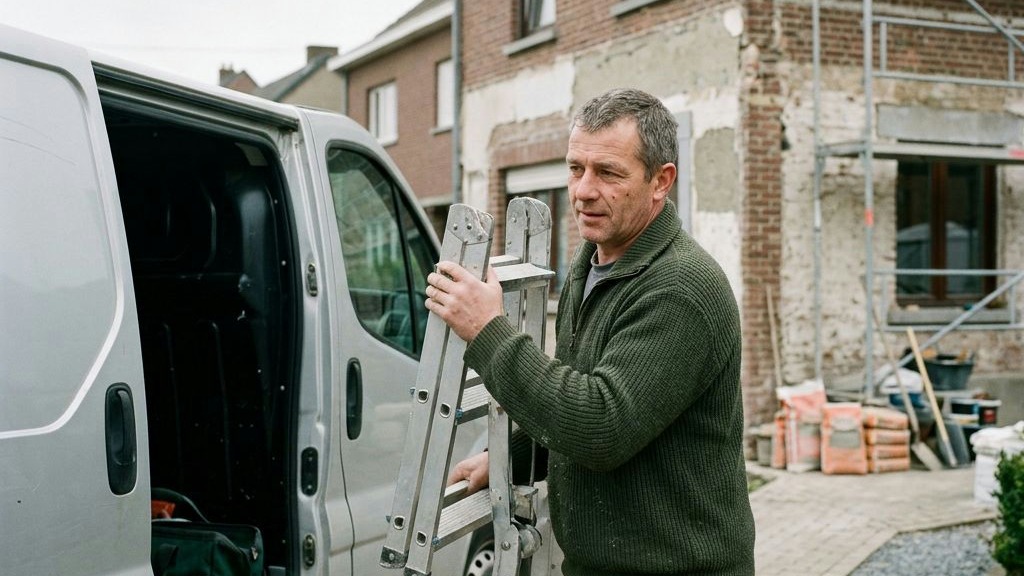
An ordinary day
- 6.45amYou set off. The coffee is in the van, and so is Tuesday’s quote, somewhere under the passenger seat.
- 7.20amFirst missed call. You are up a ladder.
- 9.10amSecond missed call. You are still up the ladder.
- 10.30amA customer sends you a photo of their problem. No explanation. No address. Just the photo.
- 12.30pmYou eat in the van while ringing the three customers back. Two do not pick up. The third wants a quote by Friday.
- 2pmThe supplier asks for the exact product code of the material you fitted at Mrs D.’s last year. You know it is written down somewhere.
- 4.40pmYou take three photos of the job. They end up with the other 400 in your camera roll, between your daughter’s birthday and a screenshot of a route.
- 6pmBack at the workshop. You write the day’s hours in a notebook. You forget half an hour, as usual.
- 7.30pmYou sit down to eat. You are thinking about Friday’s quote.
- 9pmYou write the quote. You type out the address, the prices, the terms, exactly as you did last week. And as you will next week.
- 9.40pmYou go looking for Mr L.’s invoice, which still has not been paid. You decide you will chase him tomorrow. You will not chase him tomorrow.
That is not your trade. Your trade is what you did between 8am and 5pm. The rest was just piled on top.
Three tasks that can disappear
- The quote that goes out the same evening. A customer asks for a price. Instead of starting from a blank page at 9pm, you open a template that already holds your usual items, your rates and your terms. You adjust the quantities, you approve it, it goes out. The quote leaves your desk the same day rather than three days later, and that often decides who gets the job.
- The hours and the photos from the job. You photograph the progress of the work and dictate the hours right there on site, in thirty seconds. By the evening it is all filed by job and ready to become an invoice. No more notebook to type out, and no more forgotten hours that never get billed.
- Going back to your old customers. A boiler you fitted a year ago, a roof that ought to be checked after three winters, a service that is written into the contract: the reminder goes out at the right moment, in your name. These are jobs you have already won once, and they slip away because nobody remembers them.
What stays in your hands
The price. Whether it can be done. The advice you give the customer on site. The decision whether to take a job on.
No automation prices a job for you, and none should. What goes away is the retyping, the chasing and the filing. What stays is your judgement, and that is what the customer pays for.
The maths
A quote written by hand takes a good half-hour. At three quotes a week that is an hour and a half. Over a year it comes to more than 60 hours, which is a week and a half of work spent retyping.
Where to start
The quote first, almost always. It is the task that comes round most often, the one that gets done latest in the evening, and the one where speed directly decides whether the work lands with you.
The rest can wait until next month.
What could disappear from your evenings?
A free 45-minute diagnostic, with no obligation. We look at your week and tell you what can disappear, and what is better left as it is.